

What Your Emotional Eating Is Actually Trying to Tell You | Zest Nutrition
What Your Emotional Eating Is Actually Trying to Tell You — And What to Do About It (For Women in Midlife)
Picture two women at the end of a Tuesday.
The first has eaten really well today. A proper breakfast, a decent lunch, dinner sorted by 6pm. She’s actually proud of herself. And then 8:30pm arrives, the kids are finally quiet, and she’s deep in a familiar pattern of emotional eating, working through crackers she doesn’t even really want and not even sure how she got the crackers. It’s been a challenging week…already!
The second has barely eaten. A coffee at 7am. Half a sandwich at her desk sometime around 1pm, if she remembered. She’s been running on fumes all day, just getting through it. By 7pm she’s past hungry and into a kind of frantic, eat-everything-in-sight energy that doesn’t feel like hunger at all. She is thinking… “How did I get here, AGAIN?”
Two completely different days. Same result.
If you’ve lived either of these (and most of my clients have lived both, sometimes in the same week), you’ve probably called it a willpower problem. Vowed to do better tomorrow. Felt quietly ashamed of yourself on the walk back to the couch.
But here’s what’s actually happening.
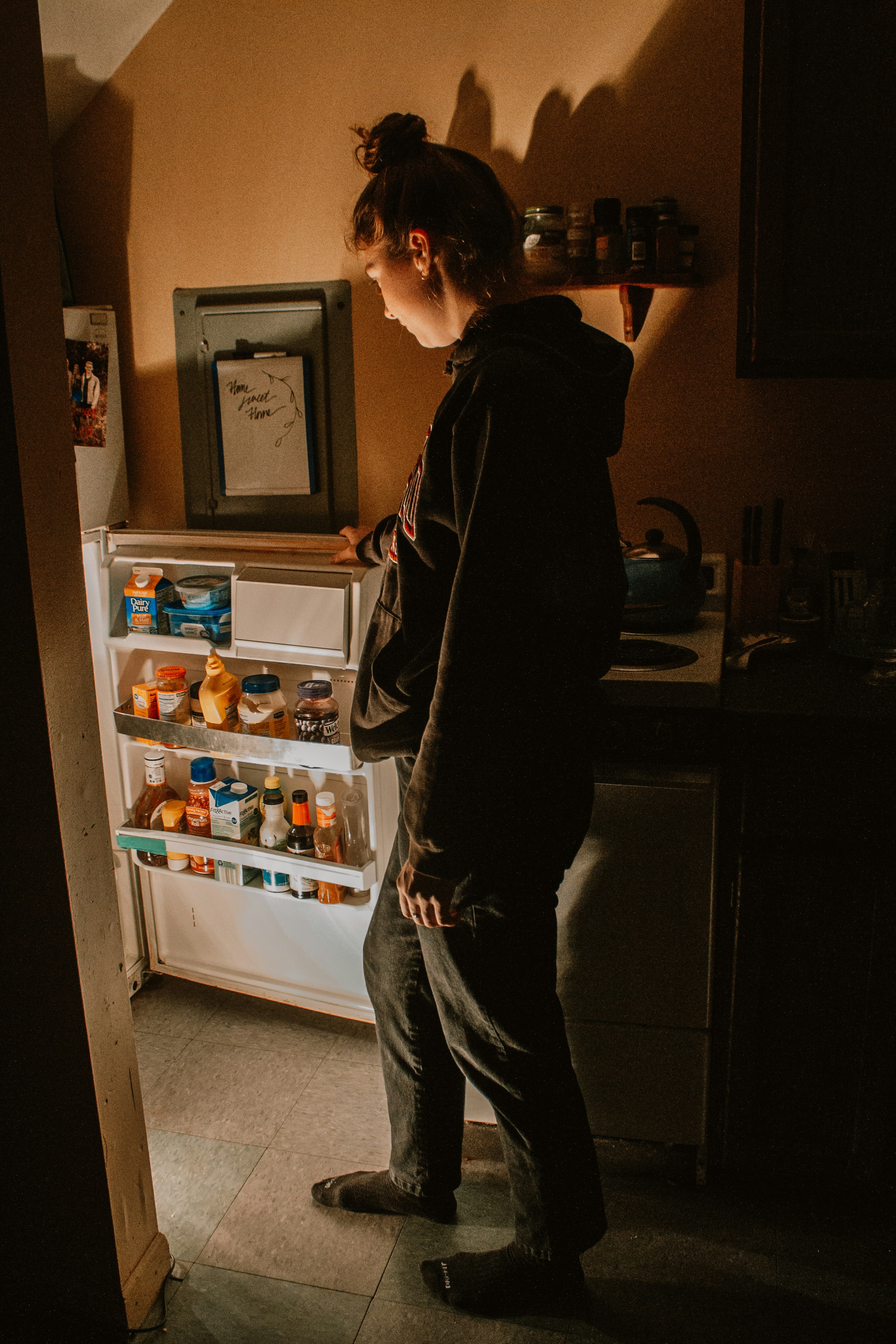
Why does emotional eating happen?
Emotional eating is a signal. Your body and brain are doing exactly what they’re designed to do: finding the fastest available route to relief when a need isn’t being met.
The trouble is we’ve been taught to treat it as a discipline problem. So, we grit our teeth, white-knuckle through the craving, and feel like a failure when it eventually wins. Which it usually does.
A far more useful question than “why can’t I stop?” is this: what is this actually trying to solve?
The biology part (stay with me)
Here’s something worth understanding, especially for women in midlife. Whether you’ve eaten well all day or barely eaten at all, you can end up in the same place by evening, and it comes down to what stress hormones are doing quietly in the background.
When blood sugar drops, whether from skipping meals or from the natural dip that comes after a long, demanding day, your body reads it as a stress state. Cortisol kicks in. And cortisol doesn’t just make you tired. It amplifies emotional stress and intensifies cravings,
pushing your brain toward the fastest available source of comfort.
That’s usually food. Often something sweet, salty, or crunchy. (Your body is predictable like that.)
So, the woman who ate beautifully all day and the woman who survived on coffee are both running on elevated cortisol by evening, with depleted decision-making capacity. The pantry was always going to win.
Knowing this doesn’t solve everything. But it does take the shame out of it, and shame is what keeps the cycle spinning.
Cravings are messengers

I teach this inside my program, Total Body Confidence Method: a craving is a message. Your body is saying, “there’s a need here that isn’t being met. Pay attention.”
Ignore the message, and the body just shouts louder. The craving gets more intense. The pull toward the pantry gets stronger. The guilt afterwards gets heavier.
So, before you reach for the biscuits, try asking yourself: what am I really hungry for right now?
Sometimes the honest answer is exhaustion: a day where you gave everything to everyone and had nothing left that was just yours. Sometimes its unprocessed stress sitting just below the surface, or needing to feel seen, or okay, or just a little less alone in it all.
And sometimes? You genuinely haven’t eaten enough today, and your blood sugar is on the floor. That one has a practical answer.
Getting curious about what’s underneath is where the shift starts.
3 things you can try right now
Pause before you act on the craving. Give it 90 seconds. Most cravings peak and fade quickly if you don’t immediately feed them. Use that pause to check in: am I actually hungry? Tired? Stressed? Overwhelmed? The goal is to respond to it rather than just react.
Ask the question. Out loud if you can. “What am I really hungry for right now?” Write it down. You don’t need to solve it immediately. Just naming what’s underneath takes some of the charge away, and that alone can shift the urge.
Eat enough and eat regularly. Three real food meals a day, built around protein and vegetables, gives your body the blood sugar stability it needs to not be in a low-grade stress state by evening. If you’re running on a coffee and half a sandwich, willpower isn’t going to save you. Biology wins every time.
Frequently asked questions
Why do I emotionally eat even when I’ve eaten well all day?
Even on days when you’ve eaten well, emotional eating can happen because of cortisol. A long and demanding day depletes your decision-making capacity and raises stress hormones, which amplify cravings and the emotional pull toward food. It’s biology, not a character flaw.
What is the difference between emotional hunger and physical hunger?
Physical hunger builds gradually and can be satisfied by most foods. Emotional hunger tends to come on suddenly, is often tied to a specific craving (sweet, salty, crunchy), and doesn’t fully go away after eating, because the real need underneath isn’t food at all.
How do I stop emotional eating at night?
Start by getting curious rather than trying to stop. Ask yourself: “What am I really hungry for right now?” Then check the basics: have you eaten enough today, and are your meals built around protein and real food? Stable blood sugar is the foundation. From there, a 90-second pause before acting on a craving gives your brain enough time to respond rather than react.
Want to take this further?
I’ve put together a free guide, the Craving Reset Toolkit, a 6-step guide to taming sugar cravings naturally. It includes practical steps and mindset prompts you can use straight away, and it pairs really well with everything in this post.
Download the free Craving Reset Toolkit here: Cravings Reset Toolkit | Stop Sugar Cravings Naturally with Real Food
And if you’re ready to go deeper, to actually understand your patterns around food, build a personalised plan that works with your biology, and do the mindset work that makes it stick, that’s exactly what we work through together inside the Total Body Confidence Method.
If that sounds like where you’re at, I’d love to have a chat.
Book a free clarity call here: Free Clarity Call Link
Creating the best version of you.
Zita x